

21
2023
-
02
The eye patch packaging machine has become increasingly sophisticated thanks to modern advancements.
Author:
In recent years, the increasing demands for packaging from a variety of products, coupled with intense competition within both domestic and international packaging machinery industries, have presented new challenges to China's packaging machinery sector. Before the emergence of eye patch packaging machines, the industry almost entirely relied on manual packaging—processes that were not only slow but also fell short in terms of consistency, precision, and aesthetic appeal, while simultaneously driving up labor costs significantly for businesses. Currently, the industry as a whole is entering a critical phase marked by product structure adjustments and enhanced innovation capabilities. While some machinery has successfully filled domestic gaps and now largely meet the needs of the local market, certain products are even being exported overseas. However, overall, the industry remains large in scale but lacks true strength: its quality is still subpar, its capacity for independent innovation remains weak, and its global competitiveness lags behind international benchmarks. This gap, however, is gradually narrowing thanks to the introduction of advanced packaging machinery—especially the recent surge in automated eye patch packaging machines. These cutting-edge systems now enable just a handful of workers, or even a single operator, to manage an entire packaging facility efficiently, making them powerful drivers of industrial modernization. Meanwhile, amid soaring demand for packaging solutions in sectors like food and pharmaceuticals, China’s packaging industry continues to maintain an impressive growth trajectory. As automation levels rise further, more and more processes are being controlled by computers, leading to the widespread integration of sophisticated sensing, detection, control, and actuation components. This trend is paving the way for increasingly intelligent and fully automated packaging systems.
In recent years, the increasing demands for packaging from a variety of products—and the intense competition within both domestic and international packaging machinery industries—have presented new challenges to China's packaging machinery sector. Before the advent of eye patch packaging machines, companies almost entirely relied on manual packaging, which was not only slow but also fell short in terms of consistency, precision, and aesthetics, while simultaneously driving up labor costs significantly for businesses.
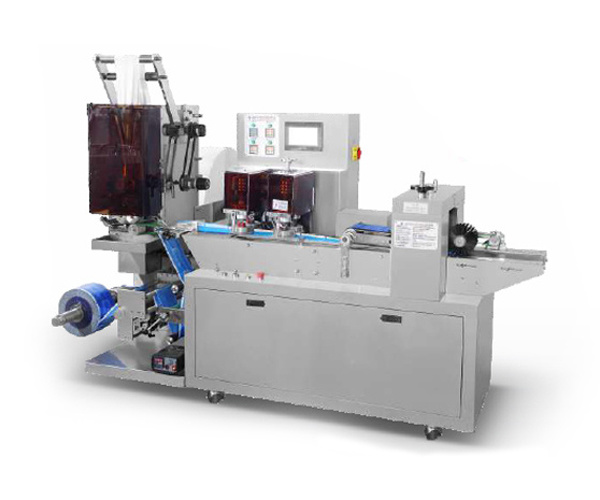
Currently, the industry as a whole has entered a period of product structure adjustment and enhanced innovation capabilities. While some machinery has filled domestic gaps and now largely meets the needs of the domestic market—and even sees exports in certain areas—overall, these products remain large but not strong, with relatively low quality, weak independent innovation capacity, and limited international competitiveness. As a result, there’s still a noticeable gap compared to advanced global standards.
With the emergence of various packaging machines—especially the automated eye patch packaging machines that have appeared in recent years—just a few people, or even a single individual, can now manage the entire packaging operation, making these innovations key drivers of industrial modernization and reusability.
Facing the massive packaging demands in sectors like food and pharmaceuticals, China's industry is maintaining an astonishing pace of growth. As automation levels continue to rise, computer-controlled systems are becoming increasingly prevalent, powering a wide array of sensing, detection, control, and actuator components. Meanwhile, cutting-edge, intelligent, and automated packaging machines are gradually replacing traditional equipment, paving the way for the healthy development of China's packaging industry.
As the packaging industry continues to evolve, packaging—now positioned as the final link in a product’s value chain—is becoming increasingly vital, driving rapid growth in the packaging machinery sector. This swift expansion has significantly boosted demand for eye patch packaging machines, while also broadening their application scope across diverse industries, including food, chemicals, pharmaceuticals, and personal care products. Meanwhile, the ever-growing market demand is vigorously spurring technological advancements within the industry, with cutting-edge intelligent and automated solutions set to dominate the landscape—and ultimately shaping the future market mainstream.
In the food industry, safety has become the top priority for food development. Ensuring safety goes beyond mere physical parameters—it also places significant emphasis on factors like food color and raw materials. As the application scope of eye patch packaging machines expands alongside growing market demand, manufacturers are increasingly challenged to meet new industry requirements. For instance, modern food packaging now enables real-time monitoring of both product quality and bacterial levels in packaging materials, which in turn calls for highly advanced intelligent technologies. This underscores the substantial growth potential of automation technology within the broader field of automated products.
The role of motion control technology in packaging machinery is to achieve precise position control and stringent speed synchronization requirements. It is primarily used in processes such as loading/unloading, conveying, labeling, palletizing, and depalletizing. Additionally, it serves as a key differentiator among high-, mid-, and low-end packaging machines—and is also a critical factor in driving upgrades and replacements.
Eye Patch Packaging Machine
Related News

undefined
Follow us
Douyin
Contact us
Address: Plot 7, Yongding Road, Songjiatai Industrial Zone, Feiyun Subdistrict, Ruian City, Zhejiang Province
Phone:86-577-65056881
Mobile phone:86-13616602277 15157790571
Email:razl@vip.qq.com
Navigation