

14
2023
-
04
What are the structure and functions of a fully automatic wet wipe packaging machine?
Author:
What are the structure and functions of a fully automatic wet wipe packaging machine? A fully automatic wet wipe packaging machine typically consists of several components: 1. **Automatic Packaging Machine**: This is the core equipment of the automated packaging line, designed to perform coordinated actions without direct operator intervention. It efficiently completes packaging tasks—such as transporting and supplying packaging materials (or containers), measuring, filling, sealing, and labeling—in a specified timeframe. Examples include various types of filling machines, capping machines, cartoning machines, wrapping machines, and binding machines. 2. **Conveyor System**: The conveyor is a critical component that links all the automatic packaging machines together, transforming them into a seamless, fully automated production line. Beyond simply transferring products through the packaging process, the conveyor system also ensures that both packaging materials (or containers) and finished goods are smoothly integrated into and out of the automated line. Common types of conveyors used in such systems include gravity-fed, powered, and other specialized designs. Gravity conveyors, in particular, rely on the natural force of gravity to overcome friction during transportation, eliminating the need for external power sources.
What are the structure and functions of a fully automatic wet wipe packaging machine?
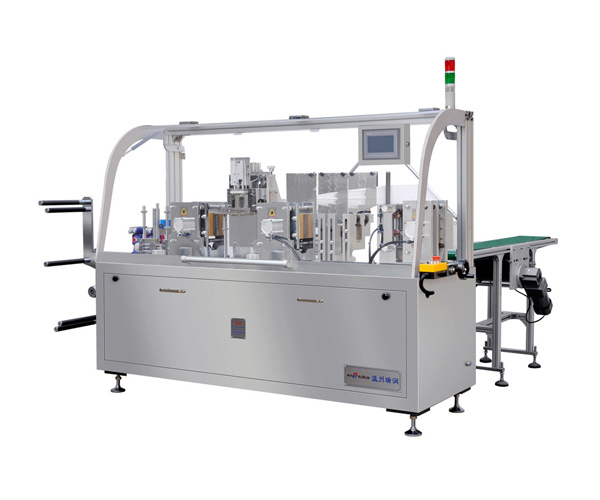
Fully automatic wet wipe packaging machine components:
There are many types of automatic packaging lines, tailored to different products, but generally speaking, they consist primarily of automatic packaging machines, conveying systems, auxiliary processing equipment, and control systems.
1. Automatic Packaging Machine
An automatic packaging machine is a device that operates without direct operator intervention, enabling each component to perform coordinated actions automatically and completing the packaging process within a specified timeframe. It serves as the core equipment for automated packaging production lines and forms the backbone of these highly efficient, streamlined systems. Its primary functions include transporting and supplying packaging materials (or containers), as well as tasks like measuring, filling, sealing, labeling, and more—such as those performed by various types of filling machines, bottling machines, cartoning machines, wrapping machines, and binding machines.
2. Conveyor
The conveying system is a critical component that connects all automatic packaging machines, transforming them into an automated production line. It not only handles the transfer function during the packaging process but also ensures that packaging materials (or containers) and packaged products are seamlessly integrated into the automated line—and ultimately allow finished goods to exit the system. Commonly used conveying systems in automated lines typically fall into three main categories: gravity-fed, power-driven, and other specialized devices.
Gravity conveyor systems use the force of gravity to overcome friction during transportation, eliminating the need for power and resulting in a relatively simple design. However, these devices can only move objects from higher to lower positions, and the exact duration of transport is difficult to guarantee. Common types of gravity conveyors include auxiliary troughs, roller tracks, and pulley-based conveying channels.
Power transmission systems. Driven by a power source—typically an electric motor—they are used to transport goods. These systems are commonly employed in packaging production lines, capable of handling both upward and downward material movement with stable and reliable speed control. Common types of powered conveyors include belt conveyors, powered roller conveyors, chain conveyors, and chain-plate conveyors.
Other conveying systems. To accommodate the unique properties of different materials, there are also several specialized conveying devices. For steel materials, magnetic conveyors can be used; while for smaller, round or thin objects, friction belt conveyors are ideal.
3. Control System
In a fully automatic wet wipe packaging machine, the control system functions much like the human nervous system, seamlessly connecting all the equipment in the automated production line into an integrated, organic whole. It primarily consists of a work cycle control unit, a signal processing unit, and a detection unit. With advancements in science, cutting-edge technologies such as photoelectric control, CNC technology, and computer-based control have been widely adopted in automated production lines, further enhancing the sophistication and reliability of their control systems. Moreover, to meet process requirements and ensure smooth coordination among the various components of the automated production line, auxiliary process devices—such as turning mechanisms, diverting units, and merging systems—are often incorporated into the setup.
Fully Automatic Wet Wipe Packaging Machine
Related News

undefined
Follow us
Douyin
Contact us
Address: Plot 7, Yongding Road, Songjiatai Industrial Zone, Feiyun Subdistrict, Ruian City, Zhejiang Province
Phone:86-577-65056881
Mobile phone:86-13616602277 15157790571
Email:razl@vip.qq.com
Navigation