

11
2023
-
05
The key factors causing unstable sealing issues in disinfectant wipe dispensers
Author:
Disinfectant wipe machinery and equipment are smart, custom-built machines designed to meet everyday needs and revolutionize the traditional use of pure cotton towels. These innovative devices produce fresh, hygienic, single-use wipes, eliminating the risks associated with reusing conventional cotton towels—like cross-contamination from repeated handling. They’re the ideal choice for hotels, offering several key advantages over similar products: 1. **Cost-effective**: Compared to other types of wipes, disinfectant wipes save you significant money. 2. **Gentle on skin**: Free from harsh additives and irritation, these wipes provide a soothing, skin-friendly experience. 3. **Convenient anytime access**: You can easily open and use them whenever needed—no waiting required! Today, hotels and restaurants commonly rely on bagged wipes for their convenience, ease of storage, and overall user-friendliness. In fact, bagged wipes often outperform those stored in tray dispensers, giving guests a clear sense of prioritized service and care. If using disposable small towels seems costly, or if relying on traditional cotton towels leads to time-consuming and expensive cleaning and disinfection processes, disinfectant wipes offer a practical, cost-efficient solution. Whether it’s for hotels, restaurants, hospitals, foot bath clubs, kindergartens, or public spaces—disinfectant wipes are the perfect choice for maintaining hygiene while minimizing hassle and expense. However, when it comes to ensuring reliable sealing performance of the wet wipe packaging machine, one common issue is insufficient sealing temperature. To address this, simply adjust the environmental temperature to ensure proper sealing—problem solved!
Disinfectant wipe machinery and equipment are smart, custom-built machines designed to meet the needs of daily life and shift away from the traditional habit of using pure cotton towels. These machines efficiently produce fresh, hygienic, single-use wet wipes, eliminating the risk of cross-contamination that often occurs with reusable cotton towels. When compared to similar products, disinfectant wipes offer the following key advantages:
1: Low cost. Compared to other wet wipes, it saves you a lot of money.
2: Disinfecting wipes are non-irritating, free of additives, and gently nourish and protect the skin.
3: If you want to use these anytime, you can simply open them whenever you need. Nowadays, hotels and restaurants commonly use individually packaged wet wipes—convenient, easy to store, and far more hygienic than those stored in wet-wipe trays. Plus, individual packets feel much more thoughtful and customer-friendly, giving guests the reassuring sense that their needs are truly prioritized.
If using disposable mini-pads is costly, or if relying on traditional pure cotton towels—which require significant expenses for cleaning and disinfection while being time-consuming and inefficient—disinfecting wipes offer a hassle-free solution. These wipes are ideal for use in hotels, restaurants, hospitals, outpatient clinics, foot massage clubs, kindergartens, public spaces, and more.
The key factors causing unstable sealing issues in disinfectant wipe dispensers like this one are primarily as follows:
(1) If the sealing environment temperature for wet wipe packaging equipment is insufficient, simply raising the temperature slightly can resolve the issue.
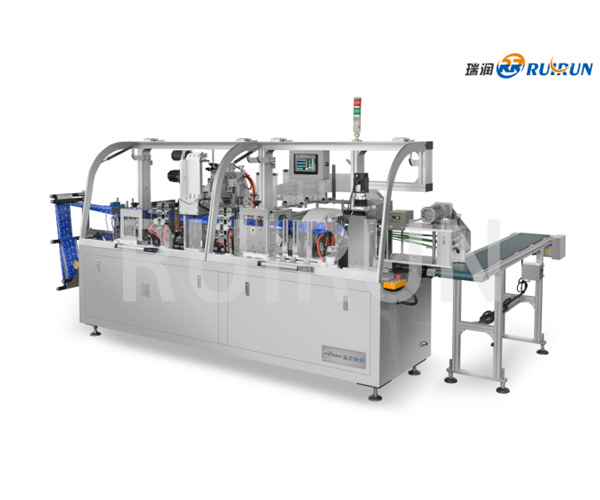
(2) The cutting edge of the heat-sealing blade consists of two separate upper and lower sections, typically coupled together within a thermal power plant to monitor temperature conditions via magnetic induction. The blade features three threaded rods: the middle rod serves as a structural support, reinforcing the blade tip, while the other two rods are equipped with compression springs and sealing gaskets, primarily used to adjust the pressure applied by the heat-sealing blade. Additionally, both the upper and lower blade tips each have two torsion springs installed. The primary cause of unevenness in the blade’s cutting edge is that the middle threaded rod is misaligned—specifically, it’s not perfectly horizontal.
Alternatively, the working pressure of the compression springs in the heat-sealing blades of the disinfectant wipe dispenser may be uneven. The solution is to recalibrate the central lead screw position so that it remains perfectly level. If the upper and lower heat-sealing blades are unbalanced, adjust the compression springs accordingly—just tighten or loosen them until the system reaches the right balance. Specifically, when the torsion spring is allowed to retract outward, the heat-sealing blade will drop downward; conversely, tightening the torsion spring on the lower blade will cause the heat-sealing blade to move upward.
(3) Uneven working pressure in the cold-extrusion covering belt of wet wipe packaging equipment can also lead to the common issue of unstable sealing. The solution is similar to addressing other scenarios with the same problem.
Three-layer implication: When a peel test is conducted on the seal, if half of the seal remains firmly intact while the other half has already separated, the packaging bag still fails to meet quality standards. This is because the contents are highly susceptible to leakage during transportation due to compression. Such issues frequently occur when the inner liner is made of OPP and the outer layer is injection-molded PE.
The key factors causing unstable sealing failures in wet wipe packaging equipment are primarily two.
(1) The adjustment procedures for the hot sealing blade and the cold-extrusion blade—whether due to uneven working pressure in the hot sealing blade or uneven pressure in the cold-extrusion blade—are exactly the same.
(2) The insufficient straightness of the heat-sealing blade affects the alignment, leading to unstable sealing—a problem directly linked to the second type of failure.
Disinfectant Wipe Machine
Related News

undefined
Follow us
Douyin
Contact us
Address: Plot 7, Yongding Road, Songjiatai Industrial Zone, Feiyun Subdistrict, Ruian City, Zhejiang Province
Phone:86-577-65056881
Mobile phone:86-13616602277 15157790571
Email:razl@vip.qq.com
Navigation